

Lessons from an Adamant Past: Operationalising Malaysia’s Maritime Strategic Culture in the Indo-Pacific
By Dr. Nasha Rodziadi Khaw (Guest Author)1
Executive Summary
- Malaysia’s contemporary Indo-Pacific strategy is in many ways resonant of the region’s historical maritime culture and strategic thought. More specifically, it reflects the Sultanate of Melaka’s use of intermediary diplomacy to navigate overlapping regional systems.
- Malaysia adopts a diversified foreign policy by engaging different major powers across distinct domains such as economic ties with China, security cooperation with the United States and technological partnerships with Japan, South Korea, Europe and India. This allows it to avoid overdependence on any single actor. This multi-vector approach enhances Malaysia’s strategic autonomy, bargaining leverage and policy flexibility amid intensifying geopolitical competition.
- Strategic multi-alignment has clear limits. Sustaining long-term resilience therefore requires Malaysia to carefully manage material and symbolic dependencies, diversify partnerships and continuously recalibrate external engagements to avoid structural constraints from any dominant external actor or bloc.
Introduction
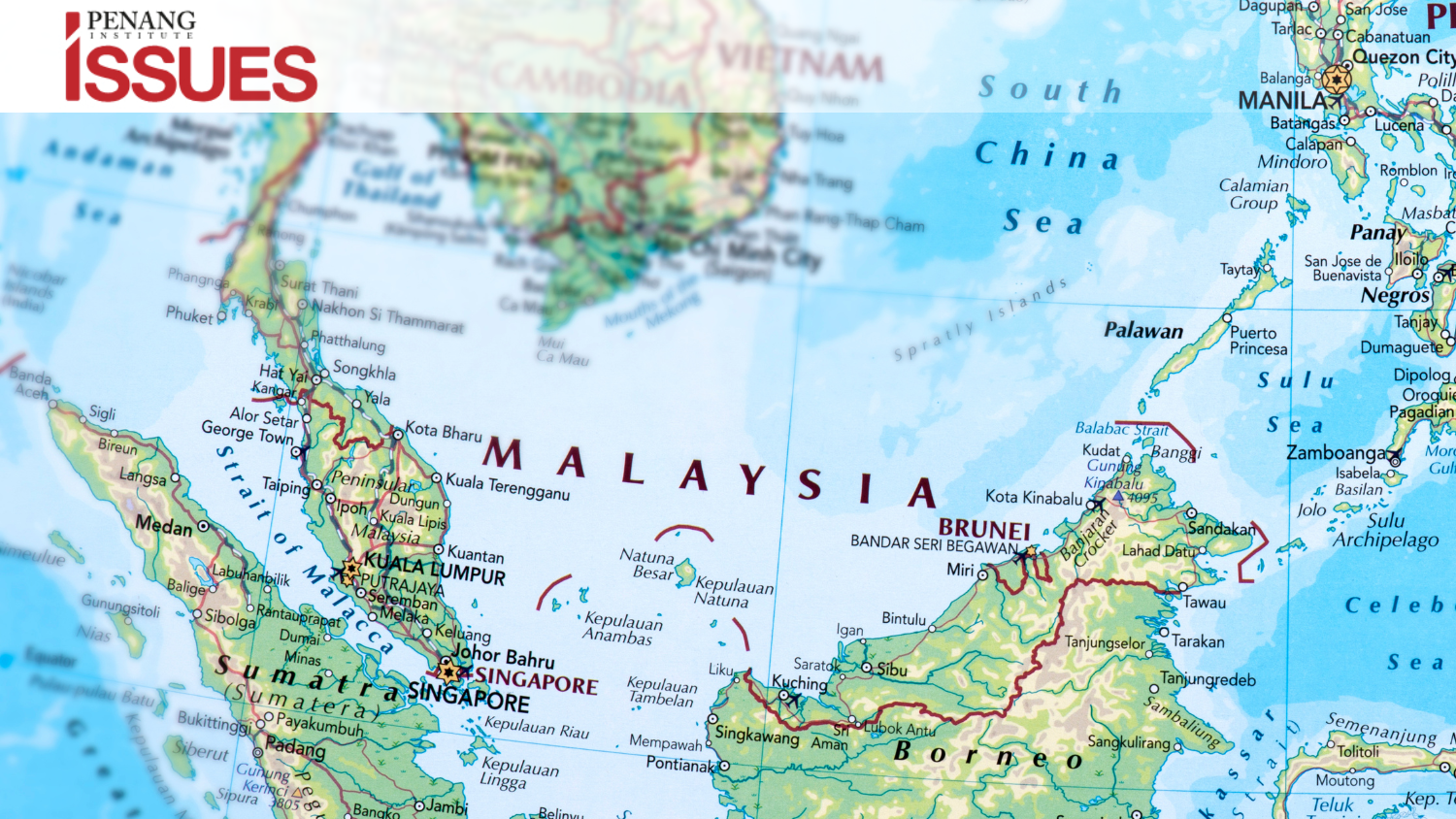
Malaysia’s position within contemporary Indo-Pacific may be better understood through the longer historical experience of maritime Southeast Asia. Situated between the Indian and Pacific Oceans and astride the Straits of Melaka and the South China Sea, Malaysia occupies a strategic position shaped by connectivity and exchange (Mohd Yusri 2023). Similar prerogatives were visible during the rise of the Sultanate of Melaka, where influence depended upon the ability to regulate commerce, cultivate diversified external relations, and position oneself advantageously within overlapping regional systems (Nasha 2022). Melaka thus maintained simultaneous relations with Ming China, Siam, Majapahit, neighbouring Malay polities and Indian Ocean trading communities. At the same time, they preserved considerable political manoeuvrability amidst shifting geopolitical conditions. In many respects, Indo-Pacific reflects similarly interconnected strategic dynamics today.
Conventional international relations frameworks such as non-alignment, balancing, hedging and middle-power diplomacy remain useful for understanding Malaysian foreign policy, yet they often inadequately capture how states simultaneously engage competing actors across differentiated strategic, economic, institutional and diplomatic domains. Frameworks centred upon rigid alignments and major-power competition frequently oversimplify the Malaysian case and fail to reflect the historical realities of maritime Southeast Asia, where political authority often operates through layered relationships, commercial interdependence, intermediary positioning and adaptive engagement with multiple external actors. As the Indo-Pacific largely reflects a geopolitical construct shaped by major-power competition, Malaysia must navigate this environment with vigilance, flexibility and strategic autonomy (Tharishini, 2023). Strategic multi-alignment therefore offers a useful framework for understanding Malaysia’s contemporary foreign policy behaviour.
While conventional hedging primarily revolves around risk management and mitigation amidst uncertainty between competing major powers (Kuik 2022, 2023), strategic multi-alignment refers to the active management of differentiated relationships across multiple strategic, economic, institutional, technological and societal domains simultaneously. It extends beyond ambiguity or selective alignment by emphasising compartmentalised engagement, network diplomacy and diversified external linkages capable of preserving long-term strategic manoeuvrability without requiring rigid alignment to any particular geopolitical bloc. Such an approach represents the operational expression of Malaysia’s longer-term maritime strategic culture, historically shaped by intermediary statecraft and diversified external engagement within competing maritime environments. This approach may be operationalised through compartmentalised engagement, narrative-building, cultural diplomacy, institutional diversification, and layered diplomatic networks extending beyond formal state-to-state relations alone.
Malaysia in the Indo-Pacific Framework
Malaysia’s contemporary strategic relevance may be better understood through the historical experience of the Sultanate of Melaka, which functioned less as a territorially expansive empire than as an intermediary maritime polity situated at the intersection of multiple regional systems (Nasha 2022). Melaka’s rise during the fifteenth century depended upon its ability to regulate circulation and movement of peoples and goods across the Straits of Melaka and South China Sea while maintaining relations with major regional powers. Within maritime Southeast Asia, tributary relations and arrangements of overlordship often differed substantially from later notions of rigid sovereignty, colonial subordination or direct territorial control. Political authority frequently operated through negotiated relationships, symbolic recognition, situational loyalty and flexible hierarchies rather than permanent external domination. Even while participating within wider tributary frameworks with China, most Southeast Asian polities generally retained considerable autonomy in managing their own internal affairs, external relations and regional networks.
At the same time, caution should be exercised against retrospectively imposing excessive coherence upon the past. Historical actors were often pragmatic, reactive and adaptive rather than guided by fully articulated grand strategies in the modern sense. Nevertheless, broader maritime political logics remain observable, particularly regarding intermediary diplomacy, diversified external engagement and the management of regional circulation within competitive maritime environments. Recognising these continuities remains important not because contemporary Malaysia directly replicates pre-modern political structures, but because present geopolitical behaviour may still reflect historically rooted patterns of statecraft shaped by centuries of maritime interaction. In many respects, strategic multi-alignment represents the contemporary operational expression of this longer historical logic, where influence derives from calibrated engagement, diversified partnerships, and network embeddedness rather than through rigid alignment or ideological exclusivity alone.
Within the contemporary Indo-Pacific, rivalry between the United States and China increasingly shapes the regional strategic environment (French Government 2025). China’s economic scale, technological influence, infrastructure investments and growing maritime presence have made it a central actor throughout Southeast Asia. For many states within the region, China simultaneously represents an economic partner, investment source, technological collaborator and to some, strategic concern. At the same time, the United States continues functioning as the principal external security actor through its alliance systems, military presence and regional partnerships. Yet, Southeast Asian states generally do not perceive regional dynamics solely through reductionist binary framework of alignment or confrontation. For countries such as Malaysia, China represents not a distant external actor suddenly entering the region, but a longstanding geopolitical and civilisational presence historically connected to maritime Southeast Asia through trade, diplomacy, migration, and cultural exchange for almost two millennia (Wade 1997).
The complexity of the Indo-Pacific environment therefore requires a strategic approach grounded not in rigid alignment or ideological exclusivity, but in flexibility, adaptability and calibrated engagement. Historical experience demonstrates that maritime Southeast Asian polities such as Melaka survived and prospered not by permanently attaching themselves to singular centres of power, but by continuously adjusting relationships according to shifting geopolitical and economic conditions (Nasha 2022). In many respects, Malaysia today operates within similarly fluid circumstances characterised by overlapping institutions, competing powers, economic interdependence and multidimensional security challenges. Strategic multi-alignment therefore reflects not merely a contemporary foreign policy adjustment, but part of a longer historical tradition of adaptive maritime statecraft. Its operationalisation today consequently requires continuous recalibration, diversified partnerships, institutional resilience, and the careful preservation of strategic manoeuvrability.
Operationalising Strategic Multi-Alignment
Narrative Building and Cultural Diplomacy
Narratives constitute important instruments within international politics because they shape how states interpret geopolitical realities, define strategic preferences and understand the intentions of other actors (Kuik, 2023). Foreign policy behaviour is influenced not only by material capabilities, but also by perceptions, historical memory, political identity and broader interpretive frameworks through which states evaluate legitimacy, trust, risk and cooperation. Narrative-building therefore possesses strategic significance because it helps shape public opinion and construct the political environment within which diplomatic interaction occurs. Through diplomatic discourse, media representation, academic engagement and intellectual exchange, states may gradually cultivate shared understandings regarding reliability, restraint, neutrality and acceptable patterns of interstate behaviour. In this sense, narratives do not merely describe geopolitical realities but actively shape perceptions and legitimise particular foreign policy orientations and strategic choices over time.
Cultural diplomacy constitutes important mechanisms through which such narratives may be operationalised beyond club diplomacy alone (Goff 2013). Historical narratives can be expressed through community engagement programmes, educational exchanges, academic collaboration, archaeological cooperation, maritime heritage initiatives and sustained intellectual engagement. This helps cultivate long-term familiarity, trust, and strategic comfort among states and societies operating within an increasingly fragmented Indo-Pacific environment. These forms of engagement create channels of interaction extending beyond official political structures, allowing relationships to remain functional even amidst geopolitical tension or policy divergence. Over time, such interactions may strengthen goodwill, institutional familiarity, and elite-to-elite as well as people-to-people linkages capable of reinforcing diplomatic cohesion. Carefully curated public narratives may also generate domestic political space for diversified foreign policy approaches by framing strategic multi-alignment as a historically grounded diplomatic tradition rooted within Southeast Asia’s longer maritime experience.
Compartmentalised Engagement
States should not be understood as fully monolithic actors possessing perfectly coherent strategic interests. In practice, foreign policy emerges through interactions among institutions, bureaucracies, economic sectors, security agencies, political actors and public constituencies that often pursue differing priorities simultaneously. Consequently, strategic multi-alignment should operate through compartmentalised engagement across differentiated domains, as well as allow various institutions within the state to pursue distinct forms of engagement according to their respective priorities. This enables states to separate areas of disagreement from areas of cooperation, allowing practical engagement despite broader political, ideological or strategic differences (Dogan-Akkas, 2026). At the same time, states may hedge to mitigate geopolitical, economic, and security risks while balancing when necessary to counteract imminent threats or excessive external pressure (Kuik, 2022). Such differentiation creates greater space for issue-specific engagement across economic, technological, diplomatic, cultural and security sectors, subject to shifting institutional and strategic requirements.
Malaysia therefore engages different powers across distinct strategic domains without allowing any singular relationship to dominate its broader foreign policy orientation. Economic engagement with China, security cooperation with the United States, technological partnerships with Japan and South Korea, alongside broader engagement with Europe, India, and West Asia collectively amount to a differentiated approach towards foreign policy management. Such an approach enables Malaysia to engage multiple centres of power simultaneously while preserving policy autonomy and reducing excessive strategic dependency upon any singular external actor. Engagement across bilateral and multilateral settings may also generate bargaining leverage by allowing cooperation in one domain to remain partially contingent upon the behaviour of other actors in separate issue areas (Kuik, 2022). By diversifying partnerships across multiple sectors, Malaysia seeks to preserve strategic flexibility, strengthen institutional resilience, and maintain sufficient room for manoeuvre amidst intensifying geopolitical competition.
Layered Diplomacy and Institutional Networks
Strategic multi-alignment increasingly extends beyond formal state-to-state diplomacy towards broader forms of network diplomacy, and operates across multiple institutional and societal layers. Universities, think tanks, research centres, maritime institutions, cultural organisations, business communities and quasi-state actors now play increasingly important roles in cultivating long-term strategic familiarity, institutional connectivity and diplomatic trust. Such developments reflect the increasingly polycentric character of the Indo-Pacific, where influence is dispersed across overlapping political, economic, intellectual and institutional networks rather than concentrated solely within formal interstate structures. Diplomatic approaches become particularly significant within fragmented geopolitical environments where official political relations may fluctuate. Through these networks, states may sustain dialogue, preserve engagement and maintain channels of cooperation even amidst broader geopolitical tensions and uncertainties.
Influence consequently derives not solely from military or economic capability, but also from network density, institutional embeddedness and the ability to shape strategic narratives within regional discourse. States capable of cultivating broad diplomatic, academic, cultural and institutional linkages often acquire influence disproportionate to their material power by positioning themselves as trusted intermediaries and facilitators of dialogue. Historical memory, cultural diplomacy, academic exchange, heritage cooperation and intellectual engagement therefore become important instruments through which Malaysia reinforces its intermediary role within the Indo-Pacific maritime order. Through these mechanisms, Malaysia cultivates long-term familiarity, strategic trust, and diplomatic relevance while strengthening its ability to navigate competing geopolitical pressures without becoming structurally dependent upon any singular major power.
Limitations and Strategic Constraints
Historical experience nevertheless demonstrates that diplomatic flexibility and diversified external relations alone cannot fully guarantee long-term resilience. The fall of Melaka to the Portuguese in 1511 illustrates the limitations faced by intermediary maritime polities when confronted by heavily militarised and expansionist powers willing to employ concentrated coercive force beyond existing regional norms. The subsequent arrival of other European powers fundamentally transformed the political and commercial configuration of maritime Southeast Asia, forcing regional polities to recalibrate their external relations and survival strategies. In response, successor states such as Johor-Riau and Aceh emerged as important regional powers that, for varying periods, successfully engaged, balanced and negotiated with competing Western actors. Nevertheless, the expanding militarisation of maritime commerce increasingly narrowed the strategic space available to regional polities over time.
This illustrates that compartmentalised engagement, layered diplomacy and strategic flexibility function most effectively when geopolitical competition remains below the threshold of overt coercion. Such approaches depend upon the continued willingness of competing powers to operate within relatively stable diplomatic and institutional environments. Once strategic rivalry becomes increasingly militarised through naval intimidation, economic coercion or unilateral attempts to dominate strategic corridors, small and middle powers may be put under undue strain and face diminishing bargaining leverage. In such circumstances, calibrated engagement alone may no longer prove sufficient to preserve autonomy or strategic space. Strategic multi-alignment should therefore not be understood as passive neutrality or the rejection of security cooperation altogether, but rather as a strategy requiring continuous adaptation, institutional resilience, credible deterrence and carefully calibrated partnerships capable of balancing national security requirements and long-term stability.
At the same time, strategic multi-alignment also possesses practical red lines and structural constraints. Excessively deep dependence upon any singular power within sensitive sectors such as defence procurement, digital infrastructure, strategic ports, energy systems or technological networks may gradually reduce strategic autonomy and generate perceptions of political alignment, regardless of official declarations of neutrality. State actors must therefore carefully manage not only material dependencies, but also geopolitical perceptions, symbolic gestures and diplomatic signalling amidst intensifying major-power competition. Strategic flexibility cannot be sustained indefinitely if external relationships become excessively asymmetrical or politically sensitive. Long-term resilience consequently requires diversified partnerships through bilateral and multilateral platforms, institutional capacity, maritime awareness and economic resilience. Most importantly, Malaysia must be able to continuously recalibrate external engagements and respond to evolving geopolitical realities without becoming structurally constrained by any singular external actor or strategic bloc.
Conclusion
Understanding Malaysia’s contemporary foreign policy behaviour requires expanding beyond conventional frameworks such as non-alignment, balancing or hedging. While these approaches remain analytically useful, they partially deflect the maritime political dynamics that have influenced statecraft within maritime Southeast Asia. The experience of the Sultanate of Melaka illustrates that power within maritime Asia often rested upon the ability to manage internal network of loyalties, regulate regional connectivity, sustain diversified external relationships, navigate overlapping political networks, and maintain diplomatic flexibility within a highly interconnected maritime environment. In many respects, strategic multi-alignment represents the contemporary operational expression of this longer history of maritime strategic culture. Its operationalisation increasingly depends upon compartmentalised engagement, network diplomacy, cultural and public diplomacy, narrative-building, institutional diversification, and layered diplomatic networks extending beyond formal state-to-state relations alone.
At the same time, we must acknowledge the structural constraints surrounding strategic flexibility. Historical experience demonstrates that intermediary maritime polities remain vulnerable when confronted by heavily militarised and coercive forms of external power projection capable of disregarding existing diplomatic norms and commercial interdependence. Contemporary Indo-Pacific conditions likewise demonstrate that compartmentalised engagement and layered diplomacy operate most effectively before geopolitical competition escalates into hostile confrontation. Strategic multi-alignment therefore should not be understood as passive neutrality or the rejection of security cooperation, but rather as a diplomatic posture requiring institutional resilience, diversified partnerships, credible deterrence and the careful management of external dependencies. Its long-term viability ultimately depends upon diplomatic agility, situational awareness, the ability to gauge shifting geopolitical red lines, and the preservation of sufficient flexibility amidst intensifying geopolitical rivalry.
References
Dogan-Akkas, B. (2026). From competition to compartmentalization: Rethinking Türkiye-Gulf relations. Middle East Policy. Advance online publication. https://doi.org/10.1111/mepo.70079
French Government. (2025). France’s Indo-Pacific strategy. Government of France.
Goff, P. M. (2013). Cultural diplomacy. In A. F. Cooper, J. Heine, & R. Thakur (Eds.), The Oxford handbook of modern diplomacy. Oxford University Press.
Kuik Cheng Chwee. (2022). Hedging via institutions: ASEAN-led multilateralism in the age of the Indo-Pacific. Asia Journal of Peacebuilding, 10(2), 355–386.
Kuik Cheng Chwee. (2023). Navigating the narratives of Indo-Pacific: “Rules,” “like-mindedness,” and “de-risking” in the eyes of Southeast Asia. Georgetown Journal of Asian Affairs, 9(1), 51–66.
Mohd Yusri Yusoff. (2023). Malaysia in the Indo-Pacific envelope: The great game 2.0. In Ivan Mario Andrew & Nazli Aziz (Eds.), Steering the course: Malaysia a maritime nation agenda (pp. 69–76). Royal Malaysian Navy Sea Power Centre.
Nasha Rodziadi Khaw. (2022). Malacca Sultanate as a thalassocratic confederation (1400–1511): Power structure of the pacified states. The Newsletter, 93. Leiden: University of Leiden.
Tharishini Krishnan. (2023). Malaysia’s strategic responses towards the Indo-Pacific construct. In Ivan Mario Andrew & Nazli Aziz (Eds.), Steering the course: Malaysia a maritime nation agenda (pp. 77–88). Royal Malaysian Navy Sea Power Centre.
Wade, G. (1997). Melaka in Ming dynasty texts. In G. Wade (Ed.), Southeast Asia–China interactions: Reprint of articles from the Journal of the Malaysian Branch of the Royal Asiatic Society (Reprint No. 25, pp. 327–366). Malaysian Branch of the Royal Asiatic Society.
You might also like: