
Executive Summary
- As the primary driver of Malaysia’s electrical and electronics (E&E) sector, Penang continues to solidify its status as the country’s technology node, underpinned by a dense network of multinational corporations and a significant contribution to national exports. Facing 2026, the state is poised for cautiously steady growth, leveraging deep industrial clustering and global semiconductor recovery amid geopolitical conflicts between the US and China.
- Penang’s tourism sector anchors its economy through medical, MICE, and sustainable eco-tourism. While the island remains the primary draw, Seberang Perai is emerging as a new frontier for community-based eco-tourism and heritage projects, such as the Sungai Juru River Cruise. Moving forward, the state is prioritising critical infrastructure upgrades and integrating advanced immigration control systems to ensure a seamless experience for high-growth markets.
- Penang’s freight and logistics sector serves as an enabler for the state’s export-driven economy. Favourable external trade policies have called for the expansion of air cargo and seaport capacity. Logistics providers also adopt high-tech logistics and warehousing facilities and infrastructure. A state-owned Penang International Logistics Aeropark (PILA) at Penang International Airport has been developed to spur the state’s logistics sector through a Free Commercial Zone, complementing the one at the North Butterworth Container Terminal (NBCT).
- Meanwhile, the global business services (GBS) sector has emerged as a vital pillar for economic diversification, leveraging the state’s deep engineering and semiconductor roots to transition from transactional operations toward high-value functions such as AI-driven analytics, R&D, and IC design. While Penang faces intense regional competition for skilled talent from Kuala Lumpur and Singapore, initiatives like the GBS Industry Academy 2.0 are actively cultivating a GenAI–ready workforce to ensure long-term resilience.
- Penang’s agriculture sector is characterised by modest but stable growth, anchored by the highest paddy yields in Malaysia and a robust aquaculture industry valued at nearly RM900m. Despite its smaller land footprint, Penang continues to outperform national productivity averages, strategically modernising its food-centric subsectors to ensure long-term food security and economic resilience.
- The construction sector is poised for sustained momentum through 2026, driven by high-impact industrial facilities, residential projects, and large-scale public infrastructure. Complementing this industrial surge is a robust civil engineering pipeline anchored by the Mutiara Line LRT and the Silicon Island development, which are set to redefine state-wide connectivity.
Introduction
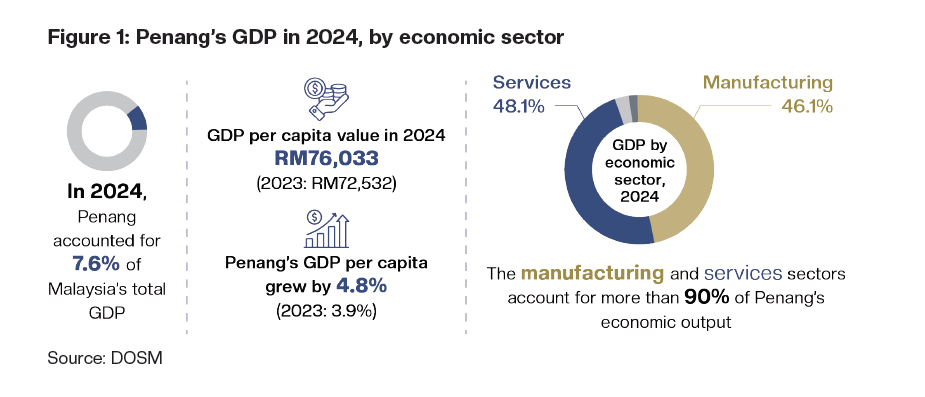
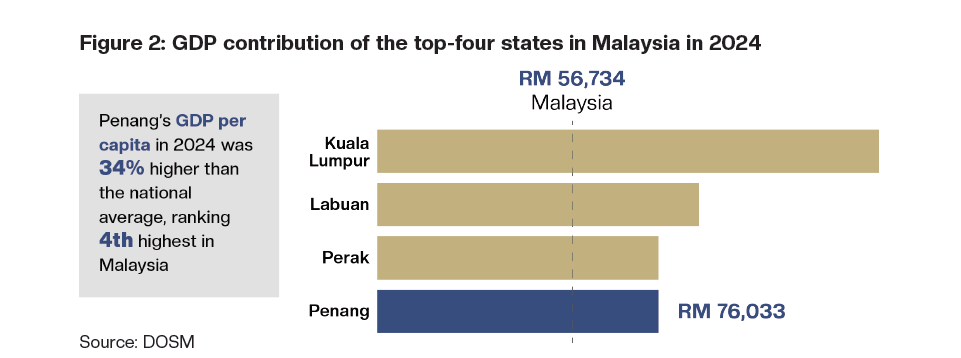
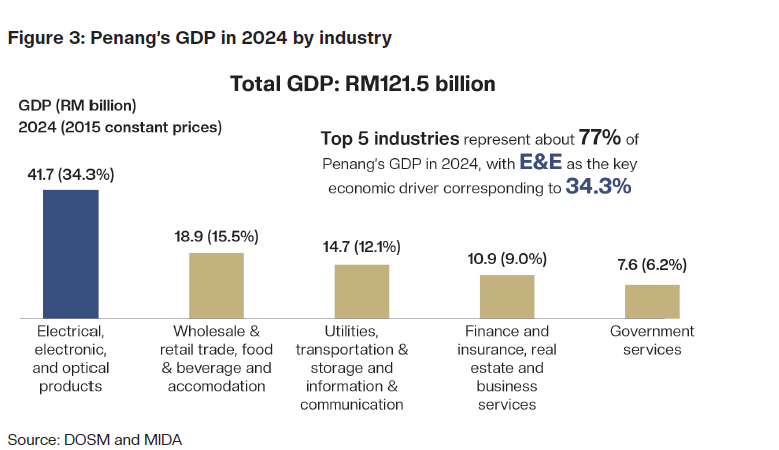
Penang continues to punch above its weight and contributes 7.6% of Malaysia’s total gross domestic product (GDP) in 2024 despite its small landmass (latest available data). The state’s economic performance is best reflected in its GDP per capita of RM76,033 in 2024, which is 34% higher than the national average (RM56,734). It ranks fourth in Malaysia for GDP per capita, trailing only the major federal territories or special economic zones such as Kuala Lumpur and Labuan. Specifically, the economy is structurally reliant on a dual-engine model, in which Manufacturing (46.1%) and Services (48.1%) together account for over 90% of total economic output. This balance is critical for 2026; as manufacturing moves into high-value front-end processes (like IC design), the services sector (via global business services [GBS] and logistics) must scale in tandem to support these complex supply chains.
Manufacturing: A Cautiously Optimistic Outlook for Penang’s Backbone Sector
By Ong Wooi Leng
Penang remains the undeniable leading manufacturing centre in Malaysia, serving as the nation’s primary hub for the electrical and electronics (E&E) sector. The state may account for only roughly 15% of Malaysia’s total manufacturing GDP in 2024, but its E&E sector is responsible for more than one-third of the country’s total E&E output and 10.9% of the overall manufacturing sector. Given its significant contribution, Penang’s susceptibility to external headwinds—particularly shifts in trade policy under Trump 2.0 and disruptions from the US/Israel-Iran conflict—makes continued strategic government intervention essential.
The state’s E&E manufacturing sector remains steadfast, contributing RM42bn to GDP in 2024, and sustaining over 200,000 jobs through a dense network of more than 1,000 companies in Penang. This ecosystem is poised to benefit from a massive tailwind as the global semiconductor industry targets a market size of US$951bn by 2030, with an estimated annual growth rate of 6.25% from 2025 to 2030.1 The Asia-Pacific region is projected to remain the fastest-growing market worldwide.
The market trends for Penang’s key semiconductor industries are highlighted below.
a. Back-end resilience: Outsourced semiconductor assembly and test (OSAT) and electronics manufacturing services (EMS)
OSAT and EMS are the bedrocks of Penang’s E&E manufacturing base. These players provide packaging, assembly, and testing services for global design houses and foundries. While traditionally viewed as high-volume, low-margin segments, rapid technological evolution enables players to hold a crucial position in the global semiconductor value chain.
Specifically, OSAT assists global fabless or IC design houses and foundries specialising in wafer fabrication for cost-efficient and speed in market entry for chip producers, while EMS comes after the chips are packaged and tested, where they assemble the final electronic device on circuit boards or final products such as smartphones, PC motherboards, or medical devices.
With nearly 40 OSAT and EMS players in Penang, the country contributes up to 13% of the global market in chip packaging and testing. Despite the competitive landscape, the global OSAT market is estimated to be valued at US$5bn in 2025 and is projected to reach US$12.5bn by 2032 at 13.6% annual growth between 2025 and 2032.2 The Asia-Pacific region is expected to lead in advanced OSAT infrastructure, with production estimated to reach US$8.9bn by 2032. In essence, the rising demand for advanced semiconductor packaging solutions and the growth of consumer electronics and automotive applications are increasingly supporting semiconductor outsourcing trends.
Given the advent of artificial intelligence (AI) and high-performance computing (HPC) chips, OSAT players are investing heavily in wafer-level packaging (WLP), fan-out packaging, and heterogeneous integration to meet the performance demands of AI accelerators and GPUs.3 Furthermore, as EMS players operate across diverse industries, they would invest in moving the value chain by upgrading their operations beyond high-volume and low-margin work to handle high-mix and low-volume projects.
b. Front-end semiconductors: IDM, fabless, and IC design
While back-end services remain for volume-based production, Penang is set to move upstream into the more lucrative front-end of the value chain. Traditional integrated device manufacturers (IDMs) like Intel, Infineon, and Ams-OSRAM remain strong despite the rise of fabless business models (that design chips only) and pure-play foundry models in recent years. They continue to leverage Penang’s geographic proximity to Kulim to create a powerhouse in the northern corridor. Many are adopting a “fab-lite” or hybrid model, focusing on core design expertise while outsourcing chip manufacturing to pure-play foundries, which helps manage capex and enables them to focus on their core expertise in full-stack chip design, packaging, and sales.
Despite intense competition from foundries and fabless companies, IDMs still account for the largest share of global semiconductor sales, with the top three global players being Samsung, Intel, and TSMC. The market is valued at US $327.5bn in 2025 and is projected to grow at an annual rate of 5% 450bn by 2033. Locally, Intel has doubled down on its IDM operations, specifically for assembly, test, and packaging in Penang, given the geographic proximity advantage of major IDMs such as Infineon and Osram Opto Semiconductors in Kulim and Penang, respectively.
Mordor Intelligence projected that the Malaysian semiconductor market would reach US$16.5bn by 2030. This growth is underscored by the RM25bn (approximately US$6bn) government-funded National Semiconductor Strategy (NSS). As of 2024, IDMs accounted for 54.2% of the Malaysian semiconductor market, while design and fabless accounted for 45.8%.
As the country’s largest chip-testing hub, Penang houses about 60 semiconductor IDMs and their horizontally integrated manufacturing services, including locally grown fabless firms, design houses, and related engineering services providers. The NSS and enhanced state initiatives have doubled their efforts to solidify the E&E ecosystems.
The state’s flagship initiative—Silicon Design @5km+, supported by a RM60m state allocation—has established an integrated ecosystem at the Penang IC Design and Digital Park in Bayan Lepas. By providing start-ups with shared lab space, access to EDA software (such as Cadence and Synopsys), and a Silicon Research and Incubation Space, the state is lowering the barrier to local engineers competing globally in AI and silicon design.
With strong federal government support through Cradle, Crest and MIMOS, this initiative is expected to accelerate the local AI revolution, further growing chip design in Malaysia and by Malaysians.
c. Local champs in equipment, automation, and IoT solutions
Building on more than half a century of industrial excellence, Penang has cultivated a unique local technology manufacturing ecosystem, with a deep specialisation in equipment and automation. The spillover from FDIs and government initiatives has driven growth in this sector, with multinational corporations (MNCs) such as Lam Research and Keysight serving as anchors for local players. Today, these home-grown companies are critical to the semiconductor, solar, electric vehicle (EV), and medical devices value chains.
In 2025, small- and mid-cap companies in this cluster demonstrated strong positive momentum. For instance, the revenue for TT Vision, which is a machine vision equipment specialist, is projected to grow by 6.7% in 2025 and 26.7% in 2026, fuelled by robust demand across the solar, battery, and semiconductor industries. This upward trend is further underscored by recent purchase orders for solar cell inspection equipment totalling RM7.11m.5
Similarly, Edelteq Holdings, a small-cap semiconductor equipment firm, recorded a remarkable performance. In 3Q25, Edelteq’s revenue was RM83.7m; it achieved a net profit of RM3.4m, representing more than a 10-fold increase in revenue and an approximately 7-fold jump in profit compared to the same period in 2024. With a market capitalisation of RM249m, the company remains a vital partner for IDMs, OSATs, OEMs, and EMS providers.6
Following a period of modest growth in 2025, large industry players such as Pentamaster, Greatech, and ViTrox have entered a phase of stable recovery, backed by aggressive investments in AI infrastructure, machine vision, and smart factory technologies. While Pentamaster is expected to see slower growth in the EV segment, its 2026 order books have been bolstered by new factory automation systems tailored for advanced chip packaging and AI servers.7 For Greatech, while the solar segment remains a dominant revenue driver, data centre projects have emerged as their key strategic partner in 2026.8 Meanwhile, ViTrox continues to leverage its core strengths in vision inspection to serve the AI server, 5G, and automotive sectors, while simultaneously expanding its footprint in industrial education and training.9
While the performance of Bursa-listed companies frequently attracts public attention, there are many unlisted automation and equipment companies that have made remarkable contributions, and which provide specialised niches that sustain Penang’s manufacturing resilience. Firms such as Estek Automation, Waftech, and Elliance focus on the physical machinery and components essential for high-tech semiconductor backend processes and solutions. Complementing this hardware, providers like Exiatec Technology, Legaxus Technology, and Xlent Innovator offer software, data analytics, AI, and Internet of Things (IoT) design and solutions for complex system integration.
Outlook for 2026: Steady growth in a globally challenging landscape
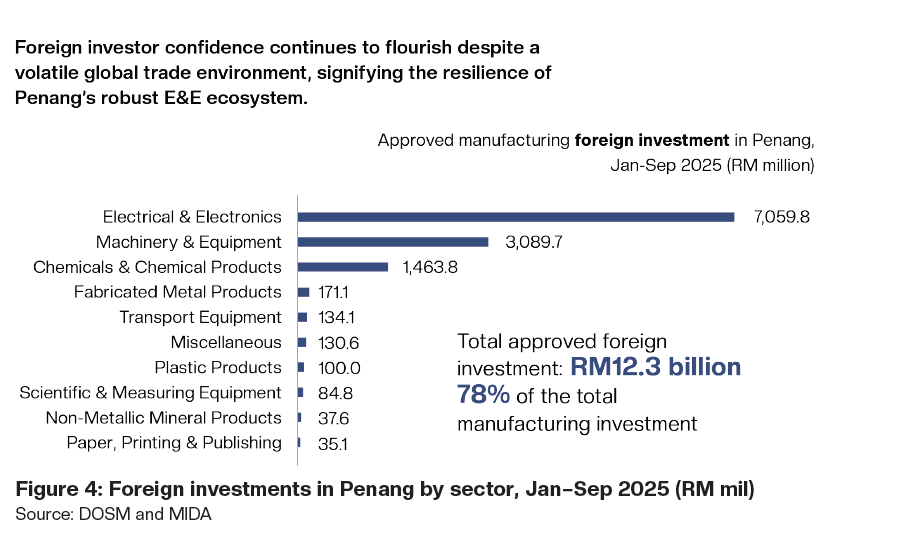
At the precursor of the global semiconductor recovery cycle, Penang is poised to be at the forefront of Malaysia’s E&E and advanced manufacturing industries. S&P Global estimated that Malaysia’s manufacturing sector has performed better than expected—the purchasing managers’ index (PMI) signals a recovery in new orders. While global trade tensions persist, Penang’s industrial base remains resilient. Based on the latest approved manufacturing investment data, foreign direct investment (FDI) in 2025 is expanded moderately to RM15.2bn, exceeding the previous year (2024: RM13.8bn).
As of September 2025, FDI in Penang continues to flow primarily from the US, China, and the Cayman Islands, with the US remaining the state’s largest source of investment despite ongoing tariff turbulence. Notably, domestic investment has also seen a significant uptick. Beyond the core E&E and machinery & equipment (M&E) sectors, there is a marked diversification into traditional manufacturing, including transport equipment, fabricated metal products, food manufacturing, furniture, paper, printing & publishing, and textiles.
Penang is leveling up its industrial ecosystem with a new 10-acre ATE campus in Batu Kawan. Inspired by the Netherlands’ Brainport model, this hub serves as an integrated ecosystem for R&D, manufacturing, and talent development. Through shared infrastructure—including labs and advanced tooling—the campus fosters deep collaboration between advanced packaging leaders and local ATE firms, accelerating supplier co-development and regional competitiveness.
Despite a complex trade environment, Penang’s exports powers the nation’s E&E growth. While Malaysia’s exports have shown double-digit year-over-year (YoY) growth, Penang’s E&E sector, which makes up the largest share of Malaysia’s E&E exports, grew by 25%, amounting to RM436.9bn. In fact, the state’s E&E exports are now estimated to exceed three times its regional GDP, reinforcing its status as a critical node in the global technology supply chain.
However, a talent shortage is a natural consequence of increased investments in Penang. While mitigating talent outflows is essential, the priority is now complemented by cultivating a future-ready pipeline of engineers and technicians to support the estimated more than 16,000 new jobs in the next one to three years.
In sum, Penang’s manufacturing resilience hinges on its ability to foster deeper industrial clustering, strengthen the local SME innovation ecosystem, and enhance supply chain visibility to maintain its competitive edge on the global stage.
Tourism: Sustaining and Diversifying Growth in Highvalue Sectors
By Yeong Pey Jung & Siti Hajar Mohd Ariff
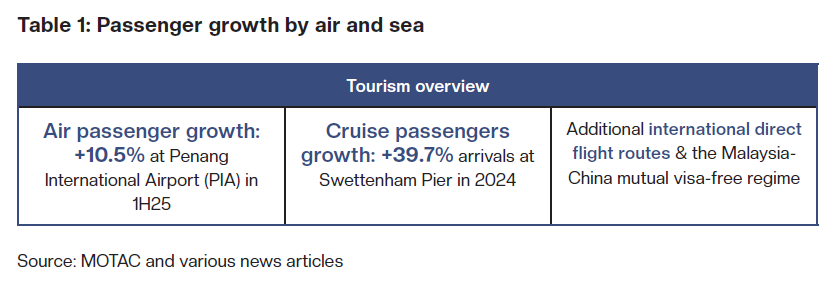
As one of the most popular tourist destinations regionally and globally, Penang’s economic significance is underpinned by high-yield and diverse tourism subsectors, including medical tourism, MICE (Meetings, Incentives, Conventions, and Exhibitions) tourism, and the booming eco-tourism segment. Displaying strong momentum, arrivals at the Penang International Airport rose by 8.2% in of 2025, compared to 2024, with arrivals totalling at 8,269,978. Swettenham Pier arrivals, however, dropped by 53.3%, due to the Red Sea conflict which saw sea routes undergoing major disruption.10 Nevertheless, Tourism Malaysia has taken steps to boost the cruise industry by including the industry in the RM50 million charter flight matching grant for Visit Malayia Year 2026. The tourism industry is well-positioned for further expansion, with the addition of direct international flight routes and increasing interest from the Chinese market. This upward trajectory extends to cruise arrivals, with Oceania Cruise Line making Penang one of its port calls in 2025.11
While Penang has long been a premier destination for medical tourism in Malaysia, the state was overtaken by the Klang Valley as the nation’s top medical tourism hub in 2024. According to the Malaysia Healthcare Travel Council (MHTC), the Klang Valley had accounted for approximately 41.6% of national medical tourism revenue in the same year, while Penang’s revenue stood at 40.7%.12 A rapid expansion private healthcare facilities in Klang Valley, combined with active regional promotion, has contributed to the region’s jump in revenue.13
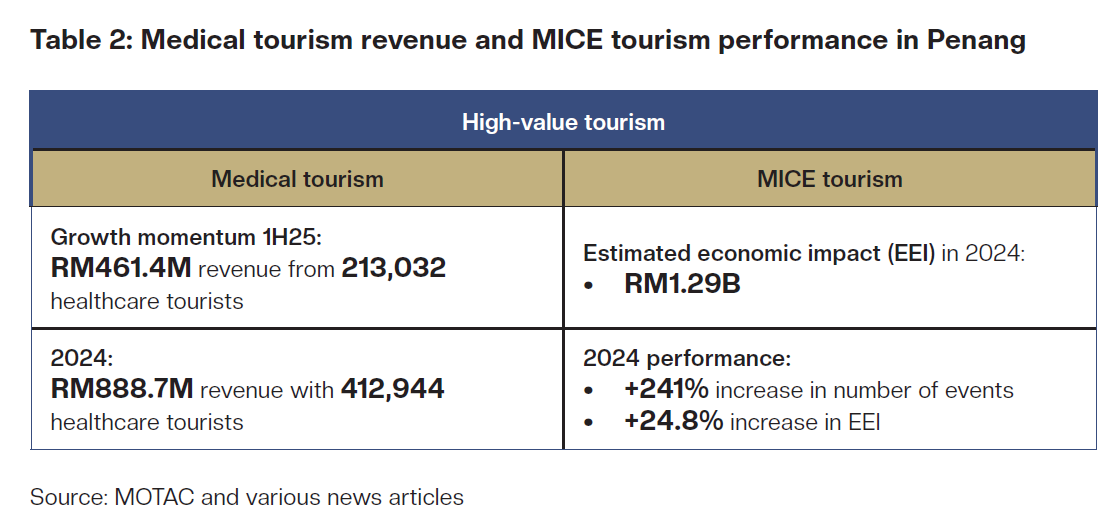
Despite this shift, medical tourism still remains a formidable driver, generating high revenue and broader multiplier effects for Penang’s economic growth. In 2024, the industry produced RM888.7m from approximately 412,944 healthcare travellers, a YoY increase of 8.0% in revenue and 3.1% in patient volume. The growth trajectory continued into the following year: the first half of 2025 saw a 2.04% increase in revenue, while healthcare travellers grew by 2.57% compared to 1H24. Up till 18 August 2025, Penang had received 213,032 healthcare travellers, yielding RM461.4m in receipts.14
Indonesia remains the largest source market for Penang. Four direct flight routes, in addition to strong cultural and linguistic affinities, boost Penang’s competitive edge.15 Meanwhile, with eight direct flight routes and the Malaysia–China mutual visa-free regime, the state is continuously working to attract more Chinese medical tourists16. To support this, the Malaysia Healthcare Travel Council had established an office in Hangzhou for coordination and promotion.17 Concurrently, the Penang Medical Centre of Tourism (PMED) continues to organise roadshows throughout China to further elevate the state’s profile as a leading medical tourism destination. This segment is a highly prioritised market, due to the potential substantial spending power and growing demand for advanced health screenings and medical treatment.
On the supply side, the capacity and quality of Penang’s medical sector continue to strengthen, with the acquisition of Island Hospital by IHH Healthcare Group18 and the development of Island Medical City. The upcoming Penang Medi-City project in Batu Kawan, a public–private initiative, also signals continued investment to enhance medical tourism in Penang. Additionally, Selgate Healthcare has committed to establishing a private specialist hospital in Balik Pulau, slated for completion by 2028, to provide high quality medical services to the island’s southwest region. These developments will help to anchor Penang as a preferred destination for medical tourism despite growing domestic and regional competition.
Nevertheless, key headwinds remain: the 6% SST on private healthcare may dampen overall demand, and a weaker rupiah, together with currency volatility, may negatively affect Indonesian arrivals. Additionally, domestic and regional competition is intensifying, from the Klang Valley, Johor, and Melaka to Singapore and Thailand. This suggests that Penang should diversify its source markets, raise the quality of medical care, and upgrade curated medical packages to sustain and strengthen its appeal. The advancement of highly specialised fields, such as cardiology and oncology, is crucial to maintain the competitive edge. At the same time, the aesthetics and wellness industry should also be given more attention and promotion, with integrated packages that cover the health traveller’s start-to-end journey, helping to strengthen Penang’s attractiveness as a medical tourism destination.
Another vital sector of Penang’s tourism strategy would be MICE. In 2024, there were 2,059 events held across Penang, welcoming 305,259 delegates and accumulating 558,543 room nights, generating an estimated economic impact (EEI) of RM1.29bn19. This indicates a 241% increase in number of events, as well as a 24.8% increase in EEI in comparison to 2023. The Setia SPICE Convention Centre remains the anchor, with major and newer hotels such as Marriott and Iconic Marjorie contributing highly attractive venues.20 The sector’s prospects are further strengthened with the opening of the Penang Waterfront Convention Centre (PWCC) in 2025, operated in partnership with KINTEX. Improved and direct connectivity from India and China further supports Penang’s bid for bigger, higher-value events.
However, the growth in delegates outpaced room nights significantly (+87% vs +3.6%), suggesting there is further scope to convert more events into overnight stays. Furthermore, increasing domestic and regional competition indicates that Penang needs to strategically package its strengths through industry promotion, leveraging its heritage settings and internationally renowned culinary reputation to attract more high-value events. Product differentiation will be necessary, for example, curating unique and heritage-rich leisure (business-leisure) packages will help to retain delegates and incentivise extended stays. Such strategies will solidify Penang’s position as a high-value MICE destination that further offers rich cultural and culinary experiences.
On the niche front, Seberang Perai is developing as Penang’s new tourism frontier, offering alternatives to the island’s traditionally popular draws. As of July 2025, the mainland accounted for almost 50% of Penang’s total homestays, with eight KampungStay villages,21 providing the infrastructure that support eco-tourism in Seberang Perai’s rural and natural areas. Eco-tourism and agro-tourism landscapes, such as the Air Hitam Dalam Educational Forest, fruit farms in Bukit Mertajam, and fishing villages in Bukit Tambun, highlight Penang’s natural richness.22
The newly introduced Penang River Cruise along Sungai Juru adds to the mainland’s eco-tourism appeal by featuring mangrove habitats, fishing settlements, and the scenic cermin langit phenomenon.23 Transformed through vast rehabilitation efforts, the river is a great example of environmental recovery, having achieved Class III water quality.24 Led by experienced river guides, tourists are guided through the river’s natural wonders and flora and fauna, supplemented by curated educational materials. The cruise is designed to be family-friendly, offering activities such as fishing and bird watching. The community-based structure of the activities also helps increase local villagers’ income, which is one of the main objectives of the initiative.
The Nibong Tebal Cultural Heritage Project, a community-driven initiative, further displays local heritage, from temples and old estates to paddy traditions and fishing communities. Recent state efforts also focus on positioning Seberang Perai as a key eco-tourism and religious tourism hub, with plans to enhance attractions such as the Frog Hill viewpoint in Tasek Gelugor, Bukit Tok Kun in Bukit Mertajam, and the Air Hitam Dalam forest reserve, alongside promoting heritage and faith-based sites like St. Anne’s Church and several historic temples.25 Festivals such as the Butterworth Fringe Festival and Nibong Tebal Festival also enhance cultural appeal. Complementing these initiatives are the bottom-up efforts from digital communities and content creators. Social media platforms like Penang Hidden Gems and local influencers such as Wabikong have become part of the drivers for Seberang Perai, using compelling storytelling to bring visibility to lesser-known locations such as Kampung Agong in Penaga. By documenting raw, authentic experiences, from hidden eateries to rural landscapes, these digital advocates bridging the gap between local heritage and a new generation of domestic travellers.
With the opening of new hotels such as The Light Hotel, Holiday Inn Juru, and Butterworth Crown Plaza,26 Seberang Perai’s tourism readiness continues to grow. Challenges remain in visibility, rural infrastructure, and branding, but opportunities lie in eco-heritage positioning, community-driven storytelling, and leveraging hotel growth for broader economic spill-overs.
At the same time, as tourism momentum strengthens, managing the capacity and inflow of tourist arrivals is more important than ever. As passenger movements at Penang International Airport increase, enhancing the efficiency of immigration and customs clearance becomes ever more essential. The planned airport expansion, designed to double capacity to 12 million passengers by 2028, remains a vital long-term fix to optimise regional connectivity. However, the immediate challenge lies in improving the current traveller experience. To address existing airport congestion, the full implementation and integration of the National Integrated Immigration System (NIISe) is necessary to upgrade border management. This enhancement is critical for attracting high-growth markets such as China and India, to ensure that Penang remains competitive as a destination for high-value tourism.
Additionally, the concentration of visitors in George Town and the resulting congestion need to be properly managed. Therefore, it is imperative to continue strengthening Seberang Perai as a complementary tourism base. The mainland’s ecotourism and cultural offerings should be consistently highlighted in tourism promotion. At the same time, public transportation and last-mile connectivity need to be upgraded, in parallel with the development of high-value tourism sectors.
Ultimately, sustaining Penang’s tourism growth requires infrastructure readiness and enhancement. By enabling smoother mobility and transitions, the sector will be able to deliver more exceptional experiences, which are important for attracting more visitors and ensuring the long-term sustainability of the state’s tourism economy. Besides physical infrastructure, a high quality workforce is equally important to maintain sustainability of the industry. Tourism employment is integrated across various sectors—from retail to F&B to hotels—and it plays a vital role in the state’s service economy. A resilient workforce that provides impeccable services to tourists is crucial for Penang to maintain its competitive edge. Aligning human capital development with infrastructure enhancement is fundamental in uplifting Penang’s tourism industry.
Freight and Logistics: Growing Alongside Manufacturing Investments
By Kenneth Ong Kar Sheng and Ong Wooi Leng
Penang’s freight and logistics sector is symbiotic with the state’s export economy. Propelled by FDI-led, high-tech E&E manufacturing, wholesale and retail trade industries, and e-commerce in the northern region, the sector accounts for about 12% of Penang’s GDP,27 amounting to RM14.7bn in 2024. As the northern region’s main logistics hub, the sector is predominantly driven by air and sea ports, with free commercial zones at the Penang International Airport (PIA) and the North Butterworth Container Terminal (NBCT) poised to strengthen the state’s logistics industry.
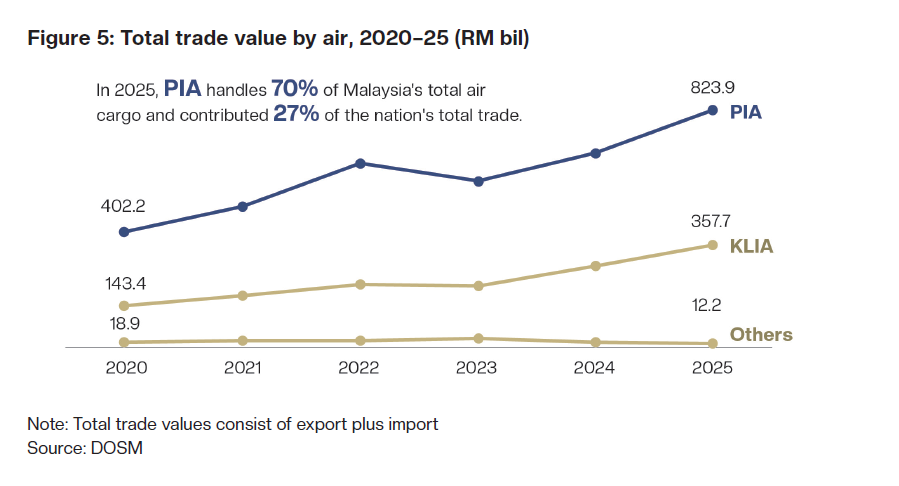
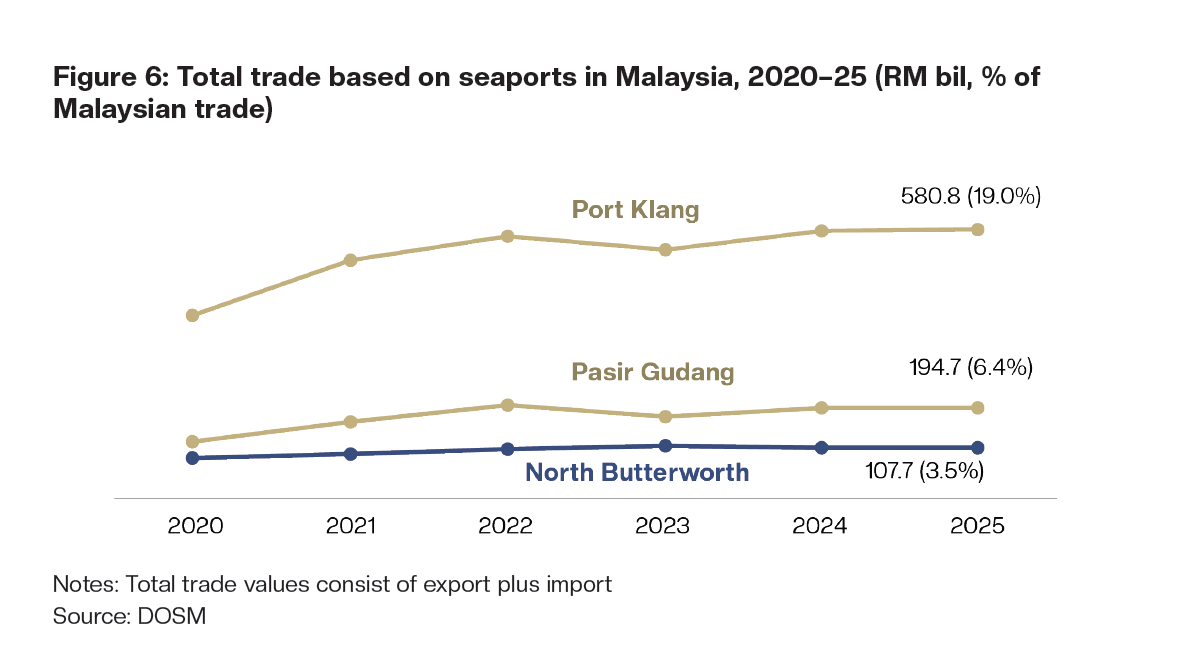
The main trade channels are the PIA and the NBCT. In 2025, the PIA contributed 27% (RM832bn) of Malaysia’s total trade passing through airports, while the NBCT contributed 3.5% (RM107bn) of Malaysia’s total trade through seaports. Collectively with other entry and exit points in Penang, these trading channels have contributed 31% (RM959bn) of Malaysia’s total trade values.
a. Air freight: Primary growth for high-tech and high-value exports
The shift to “China Plus One” strategy has further boosted the air freight industry in Penang. The surge in Chinese supply chains and the continued upward trend in manufacturing investments are accelerating demand for third-party logistics services to provide last-mile logistics, warehousing, transportation, and smart inventory management.
Despite being the second-smallest state in Malaysia, PIA handles the second-largest cargo tonnage after KLIA. Air cargo traffic grows in line with manufacturing activity at MNCs and semiconductor manufacturers in the northern region. With the global semiconductor upcycle and influx of domestic and foreign manufacturing investments, particularly in E&E, the logistics sector is projected to outpace global air cargo growth in traffic by 2.6%. According to the International Air Transport Association (IATA), air cargo demand has performed better than expected despite volatile trade policy.28 However, with recent trade policy developments in the US, air cargo demand is expected to face another round of uncertainties, with a cautiously optimistic outlook for global trade.
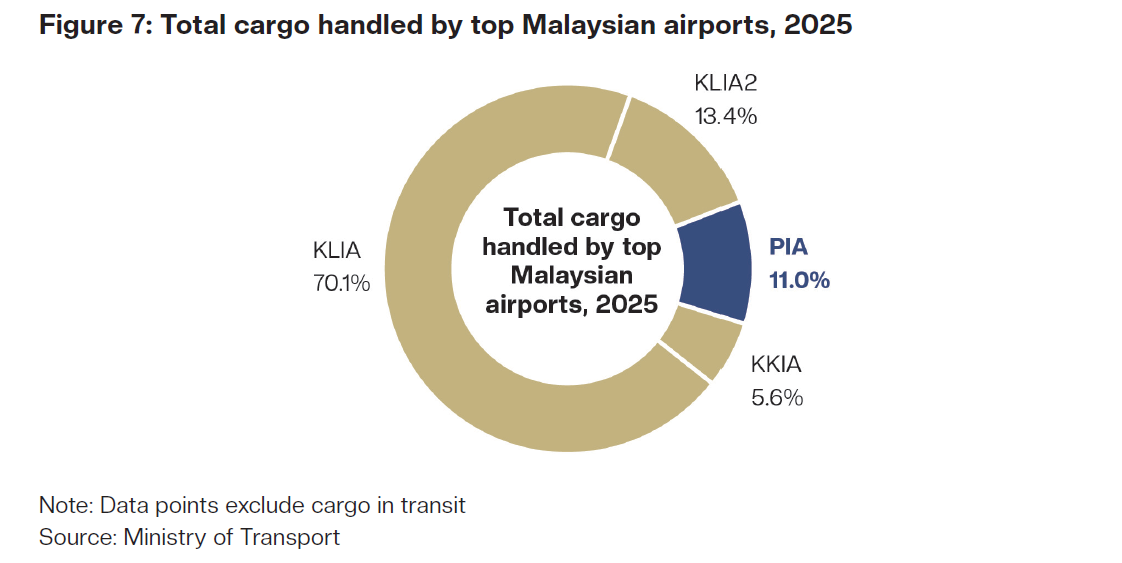
Air cargo traffic grows in correspondence with manufacturing activities in the MNCs and semiconductor manufacturing companies in the northern region. As a main gateway for international cargo, demand for air cargo is expected to improve as the value of trade increases.
To meet Penang’s export demand, the PIA is undergoing a RM1.2bn expansion, which includes doubling the air cargo terminal capacity from three aircraft bays to six.29 By 2028, the Penang International Logistics Aeropark (PILA) will be a state-owned, built-to-lease facility within the Airport Free Commercial Zone (FCZ), aiming to become a critical enabler of air cargo logistics in Southeast Asia. Bonded warehousing streamlined customs procedures, and tax-efficient re-export logistics are among the key features of PILA, along with tech-enabled logistics and direct international air connectivity for time-sensitive and high-value cargo.30
b. Seaport: A key gateway for the local hinterland in the northern region
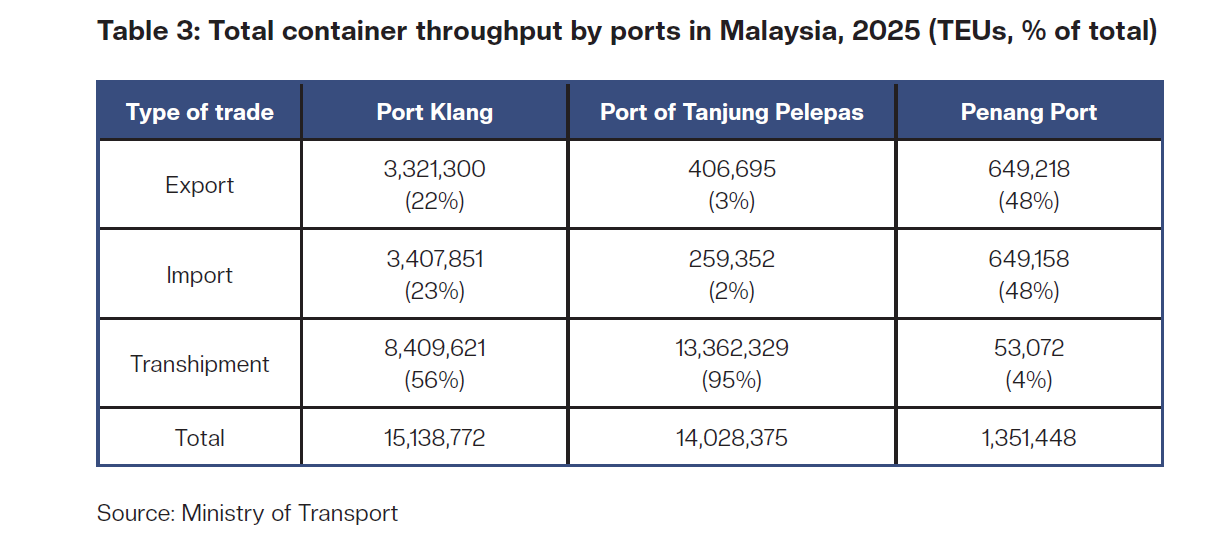
As Malaysia’s oldest maritime gateway, Penang Port serves as a critical logistics hub connecting the northern hinterland to global markets, particularly within the Indonesia-Malaysia-Thailand Growth Triangle (IMT-GT). Although its total throughput is more modest than that of other ports in Malaysia, it remains an indispensable seaport for trade across the northern corridor. This importance is underscored by persistent demand for port facilities from industrial parks in northern Perak, Kedah, and South Thailand, complemented by its strategic role in the transhipment of containers between the Bay of Bengal and the Far East.31
Penang Port manages seven facilities across the Penang Straits in Seberang Perai, anchored by the NBCT, its largest asset with seven berths. This is complemented by the Butterworth Deep Water Wharves (six berths), and the Prai Bulk Cargo Terminal (five berths), alongside specialised facilities including the Vegetable Oil Pier for liquid bulk, Prai Wharves, and the Swettenham Pier Cruise Terminal.32 Gazetted as a Free Commercial Zone (FCZ), the NBCT offers custom-free status for imports, exports, transhipment, and value-added activities. In 2025, NBCT’s critical role was reflected in its containerised cargo throughput, contributing RM107bn—or 3.5%—of Malaysia’s total trade value. While Port Klang in Selangor has consistently dominated the national maritime landscape, accounting for approximately 40% of trade, Penang’s infrastructure remains the gateway for northern region’s high-value industrial output.
Under the 30-year Penang Port Commission (PPC) Development Plan (2023-2053), Penang Port is aggressively scaling its terminal capacity and upgrading its core infrastructure. One of the cornerstone initiatives is a RM250m earmarked for the expansion and upgrading of NBCT between 2024 and 2027. This initiative aims to nearly triple port’s maximum capacity—climbing from 2.3 million twenty-foot equivalent units (TEUs)33 in 2024 to a projected 6.8 million TEUs by 2053. Beyond physical expansion, the plan integrates digital transformation, including yard equipment upgrades and the implementation of state-of-the-art facial recognition technology.34
c. Warehousing and storage services: A foundational pillar for Penang’s logistics ecosystem
The warehousing and storage services sector is a key component of Penang’s logistics ecosystem, providing the essential infrastructure to sustain the state’s high-tech manufacturing and supply chain operations. While the PIA and the NBCT provide infrastructure to facilitate high-volume trade, the “last mile” and specialised storage are driven by private firms managing sophisticated warehousing, packing, and distribution services.
Fuelled by the surge in business-to-consumer (B2C) e-commerce, FDI-driven manufacturing, and certified Halal logistics, Penang has emerged as a preferred destination for global third-party logistics (3PL) providers, cold-chain operators, and e-fulfilment centres.35 Major 3PL players like DHL and FedEx facilitate the distribution of components and finished goods, while licensed manufacturing warehouses (LMWs)—typically operated by foreign MNCs—integrate storage with production to benefit from customs duty exemptions on raw materials.36 Local courier providers are integral to Penang’s logistic ecosystem, serving as critical operational buffers during peak festival seasons like Chinese New Year and Ramadan. Local providers like Pos Malaysia utilise network densification and dynamic routing to mitigate congestion. By deploying localised “pop-up” sorting hubs and fulfilment centres, they ensure the demand surge in festive volumes does not compromise delivery timelines.37 The sector’s evolution is increasingly bolstered by high-tech adoption, exemplified by US semiconductor giant Lam Research, which has implemented an automated storage and retrieval system (ASRS) at its Batu Kawan Industrial Park (BKIP).38
Looking ahead, the momentum continues with significant investments slated for 2026. PTT Synergy Group has secured a RM500m investment for cutting-edge ASRS warehouses in the Valdor Industrial Area.39 Furthermore, FedEx has committed RM46m to a new logistics and air cargo facility within the upcoming PILA, which is expected to commence operations near PIA by 2028.40
Global Business Services: Diversifying Growth for Economic Transformation
By Yeong Pey Jung & Siti Hajar Mohd Ariff
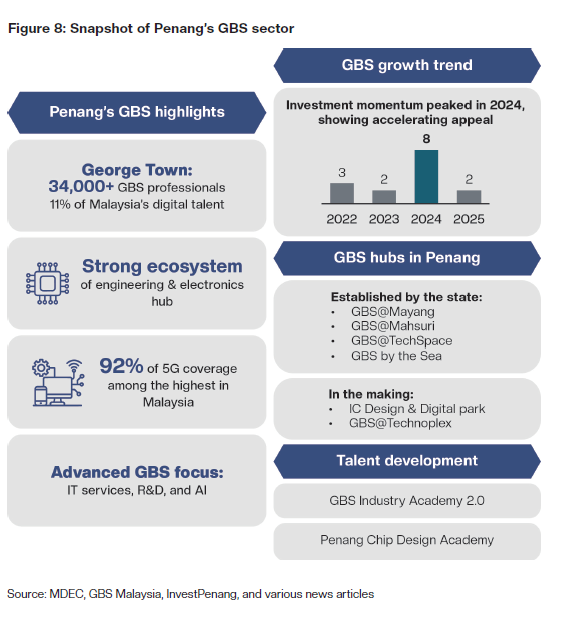
The global business services (GBS) sector has emerged as a key driver of Penang’s economic transformation, complementing the state’s established manufacturing base. Accounting for more than 34,000 professionals, or about 11% of Malaysia’s digital talent pool in 2024, Penang offers one of the largest concentrations of skilled workers outside Kuala Lumpur.41 This talent pool, supported by Penang’s mature engineering, electronics manufacturing, and semiconductor ecosystem, positions the state as an advanced GBS location ideal for IT shared services, specialised engineering support, R&D functions, and tech-intensive global operations.42
Penang is also home to several GBS hubs. GBS@Mayang and GBS@Mahsuri are established sites hosting MNCs such as Jabil, Swarovski, Cisco Systems, and Clarivate,43 cementing the shift from transactional BPOs (business processing operations) towards higher value GBS functions such as analytics and data engineering. Using the “build and lease” model, Penang Development Corporation (PDC) is a key player and a pivotal infrastructure partner. Having invested a total of RM31m into the aforementioned hubs, PDC is committed to establishing a robust ecosystem for digital transformation and innovation.44 Building upon this base, the state unveiled its ambitious milestone project: the IC Design and Digital Park, which will house three new GBS hubs.45 This is driven collectively by PDC, who is responsible for infrastructure development, and InvestPenang, who manages investment acquisition.
The first phase includes GBS@TechSpace, launched in 2024, which also functions as the Silicon Research and Incubation Space (SRIS) for the Penang Silicon Design @5km+ initiative. Also in this phase is GBS by the Sea, launched in August 2025 to provide modern collaborative spaces that attract international players and foster innovation-driven services.46 GBS by the Sea is expected to be fully occupied by global and regional players, poised to create more than 1,000 high-value digital, engineering, and R&D jobs.47
The forthcoming GBS@Technoplex, planned for completion in 2028, will expand the modern hybrid office space within the Penang IC Design & Digital Park to over one million square feet, further reinforcing Penang’s role as a digital services hub. This development is specifically designed for IC design and GBS investments, with a strong focus on AI-enabled operations and R&D services. Also part of the Penang Silicon Design @5km+ initiative, GBS Technoplex houses the state’s ambitions to collectively gather IC design and high-value GBS under one ecosystem. This also aligns with the Digital Economy Master Plan (DEMP), where one of the key strategic pillars is to enhance AI technology and R&D services.48 The state’s commitment to this strategy was emphasised at the 2025 GBS conference held in Penang, themed “AI in action: Transforming the Future of GBS.” The event highlighted Penang’s focus on empowering AI-driven growth and promoting automation and advanced analytics as the state’s core capabilities.
These developments are taking place against the backdrop of robust infrastructure readiness. Penang’s 5G coverage has reached 92%, among the highest in Malaysia, enhancing digital reliability for automation, AI-enabled processes, and global operations.49 The state has also continued to attract new GBS investments, with new centres established in 2022 (3), 2023 (2), rising significantly in 2024 (8), and continuing in 2025 (2), underscoring Penang’s accelerating appeal relative to other locations.
Meanwhile, the GBS Industry Academy 2.0 is training 500 generative AI (GenAI)–ready talents by 2026, ensuring the workforce adapts to rapid shifts in artificial intelligence and digital transformation.50 This helps to produce more high-skilled workers in addition to sharpening the state’s competitive edge. These developments signal opportunities for Penang to strengthen its role as a digital hub, create high-value employment, and diversify beyond manufacturing.51 In this sense, even if the manufacturing sector faces potential downturns due to the US tariffs and supply chain shifts, the GBS sector will ensure Penang’s economic resilience by solidifying Penang’s position as a digital business-services hub and beyond.
However, competition for skilled talent remains high, particularly with Kuala Lumpur dominating over half of the country’s digital professionals, as well as attractive offers from Singapore and within the region. This reflects broader national GBS challenges, where talent attraction and retention are constrained by geographic concentration in the Klang Valley and unclear career pathways to senior roles.
For Penang, these challenges are intensified by the need to compete for high-value digital, AI, and engineering skills against both Kuala Lumpur and Singapore, while balancing the demands of its strong electronics and manufacturing base. Rising costs and the need for continuous upskilling also pose risks to growth. Penang’s GBS expansion is also influenced by wider structural gaps highlighted at the national level. While the state is ahead of secondary regions in connectivity and digital readiness, rapid growth may strain infrastructure in key hubs, including transport, data centre capacity, and affordable commercial space.
Nonetheless, Penang’s strong ecosystem, public-private partnerships, and focus on next-generation digital skills position it well to capture opportunities in analytics, automation, and AI-enabled solutions.52 A steadier GBS talent pipeline will help Penang attract higher investment and MNCs, and support the expansion of existing centres.
Agriculture: Modest Growth and Strong Productivity Gains
By Nadhirah Zainuddin
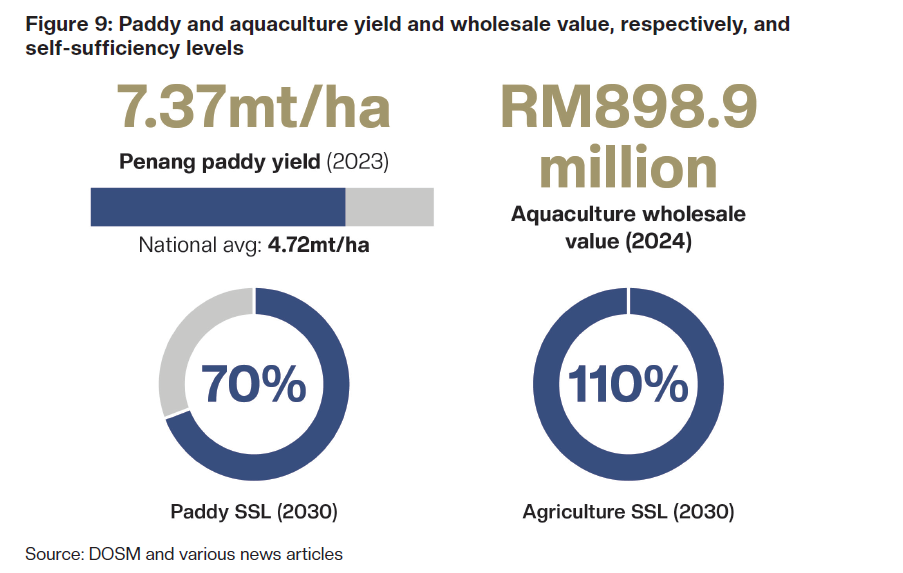
Penang’s agriculture sector, while maintaining a stable GDP contribution of approximately RM2bn (2015–24) and an average annual growth of 0.6%, grew moderately in 2024. This momentum was driven by efficiency gains, high-yield technology adoption, and strategic initiatives to boost the state’s self-sufficiency levels (SSL). Overall sector performance is expected to align with the national agriculture sector growth estimate of 1.2% in 2025.53
In the first half of 2025, growth was primarily sustained by food-centric subsectors. The Fishing subsector (which includes aquaculture) is anticipated to remain robust, mirroring the 2.8% increase recorded nationally. Penang is a key aquaculture producer, with the wholesale value reaching RM898.9m in 2024.54 The state targets an Aquaculture SSL of 110% by 2030, increasing the area under cultivation to 1,156.5 hectares. The Other agriculture subsector (including paddy, vegetables, and fruits) is also forecast to expand, in line with the national growth of 2.1%.
Growth in the second half of 2025 is expected to be underpinned by continuous production improvements in the paddy, fruits, aquaculture, and cattle segments:
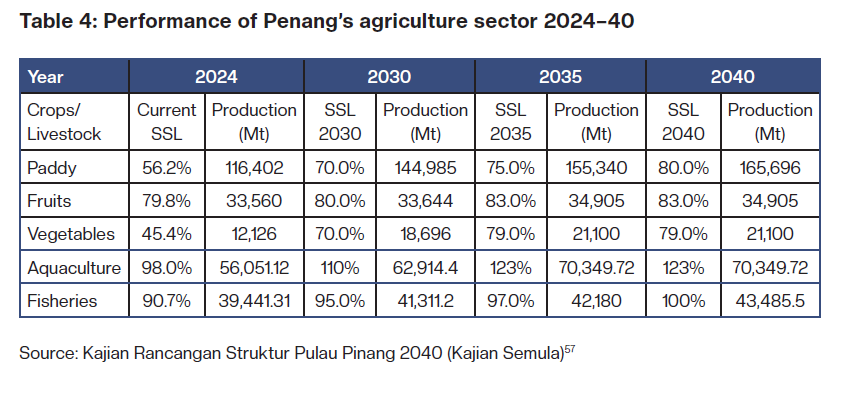
- Paddy: Penang’s strategic focus on efficiency has resulted in the highest rice yield per hectare in the country, recording 7.37 metric tons/hectare in 2023, significantly above the national average of 4.72 metric tons/hectare. The state is targeting a paddy SSL of 70% (up from 56.2% currently) by 2030, aiming for a production of 144,985 metric tons.
- Other crops and livestock: High-value fruit and vegetable production will benefit from expanding IoT-controlled environments, supporting SSL targets of 83% for Fruits and 70% for Vegetables by 2030. The Livestock subsector is expected to register growth, aligned with the moderate 2% growth recorded nationally.
Climate resilience and adaptive agricultural strategies
To mitigate the escalating risks of climate change and weather volatility, the state is prioritising a strategic pivot towards climate-resilient agriculture. Future industry growth is increasingly dependent on the adoption of precision farming to safeguard food security and stabilise production yields. By integrating automated systems and IoT-controlled environments, local farmers can mitigate resource scarcity and optimise irrigation management, particularly for high-value vegetable and fruit subsectors. This transition is critical to achieving the state’s ambitious self-sufficiency level (SSL) targets, including 70% for vegetables and 80% for fruits by 2030.
Technological transformation: IoT, automation, and green nanotechnology
Penang is spearheading agricultural modernisation through high-impact collaborations with local and international research institutions. A primary highlight is the RM1.622m high-impact rice farming project utilising QarboGrow, a locally developed green technology photosynthesis booster by Qarbotech.55 Applied across 2,000 hectares of paddy fields, this carbon nanotechnology has successfully increased average yields from 4–5 tonnes to 6–7 tonnes per hectare, translating to a 30% increase in productivity and higher farmer incomes.
Furthermore, Penang is set to be the pioneer state in Malaysia for ratoon rice planting technology in collaboration with MARDI and Fujian Agriculture and Forestry University (FAFU). This innovative method allows for a second harvest just 70 days after the first, potentially enabling up to four harvests per year from only two planting cycles.56 The integration of such automation and smart farming infrastructure significantly enhances the state’s competitiveness while ensuring sustainable land use.
Construction: Sustained Growth Momentum in Highvalue Infrastructure
By Nadhirah Zainuddin
Penang’s construction sector is projected to maintain strong momentum through 2026, pivoting from the national performance to focus on high-impact private and public projects. The sector’s expansion is underpinned by key subsectors driving industrial capacity and connectivity.
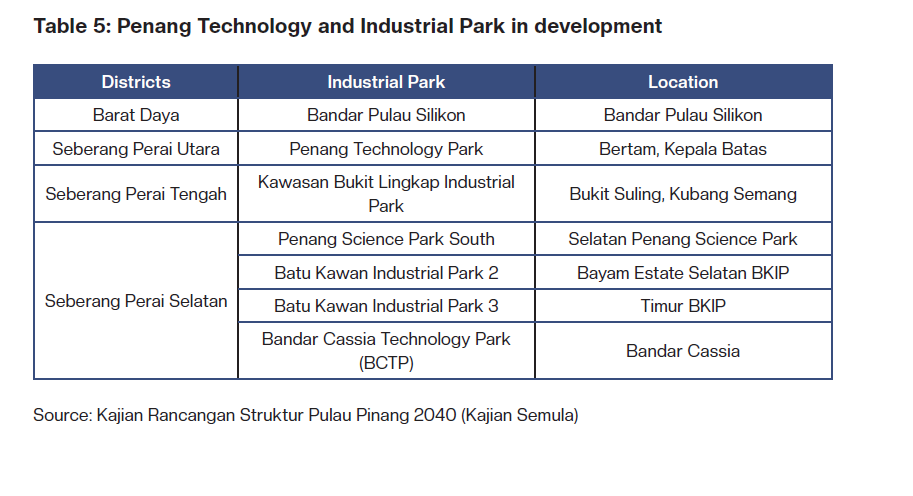
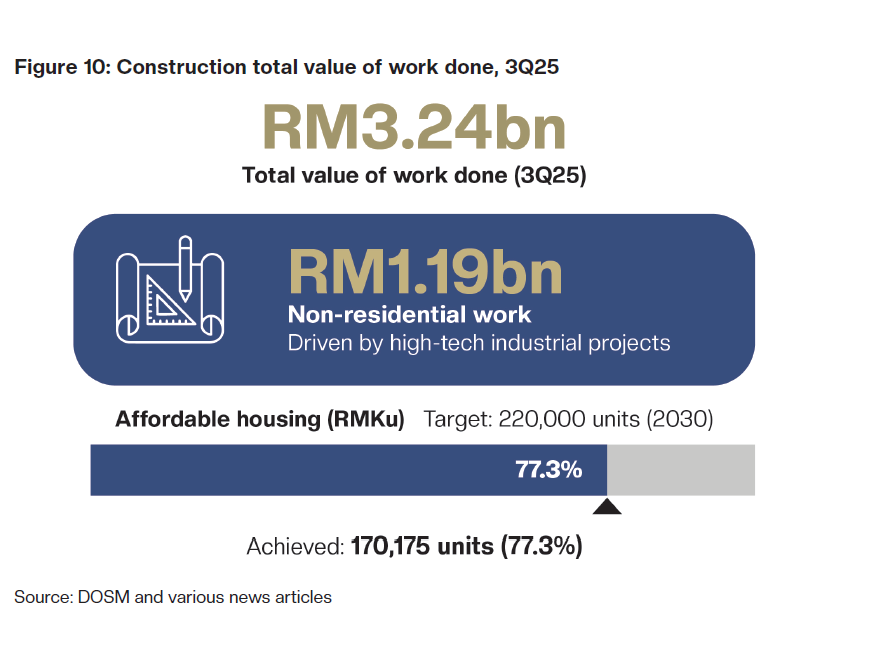
The building construction subsector, encompassing both residential and non-residential segments, serves as a primary growth anchor, contributing 2.2% to Penang’s GDP in 2024. The non-residential buildings subsector is the primary growth anchor, recording robust expansion driven by the sustained acceleration and realisation of private investments in industrial facilities. Contributing the highest value of work done at RM1.19bn,58 this growth is specifically propelled by the expansion of global technology giants such as Intel, Micron, and ams OSRAM, which continue to reinvest in high-tech manufacturing hubs. Demand for semiconductor and advanced electronics manufacturing facilities is generating opportunities for contractors to upgrade their skills, with a focus on green-certified design and cleanroom standards. This growth is spatially concentrated in major hubs, including the Penang Technology Park network in Bertam and Batu Kawan Industrial Park 2 & 3 in Seberang Perai Tengah.
The residential building subsector also provided steady support, recording a work value of RM770.9m. This is driven by sustained demand for affordable housing (Rumah MutiaraKu) and government-led home-ownership initiatives such as Housing Credit Guarantee Scheme (SJKP). The state government has set a primary target to supply 220,000 affordable housing units by 2030.59 This aggressive supply strategy aims to bridge the critical affordable housing gap of 126,803 units in 2025, further supported by a dynamic stock scenario that adds 5,000 units annually starting in 2026.
The civil engineering subsector is anticipated to drive strong momentum in 2026, supported by the continued rollout of large-scale public infrastructure projects, creating a stable forward pipeline. Key drivers include:
- The Penang LRT (Mutiara Line) project, spanning 29.5 kilometres,60 serves as a critical industrial connectivity catalyst linking Silicon Island to Komtar and Penang Sentral via a dedicated crosschannel rail bridge. Valued at RM16.8bn,61 the project is spearheaded by MRT Corp with SRS Consortium (Gamuda Berhad) appointed as the lead contractor for the “Design-and-Build” works, which encompass 21 elevated stations including the Bandar Sri Pinang station designed as a Transit-Oriented Development (TOD). Physical works, such as piling, are projected to commence by mid-2025, with a target for full operations by December 2031 to facilitate more efficient integration between the Bayan Lepas FIZ and Bandar Cassia Technology Park.
- The transformative reclamation of Silicon Island and Andaman Island serves as a dual catalyst for Penang’s long-term economic evolution, collectively projected to generate massive high-tech and
- luxury growth. Silicon Island (2,300 acres)62 is envisioned as a premier high-tech hub featuring a 700-acre Green Tech Park built to ESG standards and the Heart of the Island (HOTI) commercial centre; it is expected to attract RM74.7bn in investments and contribute RM1.1tn to Malaysia’s GDP by 2050 while creating over 220,000 jobs. Complementing this, the 760-acre Andaman Island (slated for completion in 2028) is being developed into a sustainable luxury destination with a gross development value (GDV) of RM60 bn, seamlessly linked to Penang Island via the Andaman and Gurney Bridges.
- The residential buildings subsector is expected to register sustained demand, supported by the critical need for affordable housing. Projections indicate a housing supply shortage of more than 150,995 units by 2030. To manage this, the government is implementing a supply-demand realignment strategy to specifically address the housing overhang currently concentrated in the premium high-end segment. Growth will be bolstered by new launches in the affordable and midmarket housing segments, focusing on integrated township development in key growth corridors, particularly Seberang Perai.
Conclusion: Navigating Global Uncertainties through Industrial Resilience and Strategic Diversification
By Ong Wooi Leng
Penang is indispensable as a primary engine of the country’s economic development. The state’s trade and industry development fundamentally shapes national long-term strategic plans, particularly regarding E&E policies, high-value job creation and specialised skills development. In this ecosystem, logistics, financial and business services serve as critical enablers. While chip- and tech-based manufacturing, packaging, assembly and testing remain the core drivers, traditional manufacturing sectors—such as steel, furniture, textiles, paper, and food—remain significant due to Penang’s land and rail connectivity to the northern and eastern corridors and Southern Thailand. Furthermore, the state’s demographic profile is uniquely cosmopolitan; foreign talent and residents represent a substantial share of the population, driven by employment, education, and retirement migration.
As Malaysia’s fastest-growing state, its compounded per capita GDP grew at 8.1% annually (2020-24), marking the highest per capita GDP state (RM76,033) in 2024 after the Federal Territories of Kuala Lumpur (RM136,365) and Labuan (RM87,003). Although the state is on the right track toward a high-income trajectory, there remains a significant disparity where it is below the average for high-income countries (US$50,302 in 2024). Therefore, high-value innovation is the state’s next focus.
External headwinds render the country highly susceptible to global supply chain disruptions. The volatility of US reciprocal tariffs on high-net-import nations, coupled with the recent US-Israel-Iran conflict, poses profound uncertainties. In anticipation of surging logistics costs, book orders have begun to soften. Despite a recovery in E&E demand prior to the crisis, the supply chain now faces potential stagnation. As inflation picks up, consumer behaviour has shifted toward “wise spending” and cautious travel plans. Consequently, business confidence has subdued, and a slowdown in investment is likely.
Notwithstanding Penang does not have noticeable direct trade with Iran, the global oil supply shock threatens to disrupt almost all industries. Surging energy costs are forcing a recalculation of total shipping costs. Given Penang’s heavy reliance on trade with the US, Asia, and Europe, these secondary-level effects have compelled industries to ensure that shipping routes to these key markets remain secure and resilient.
To energise industrial resilience, broadening the economic focus is an essential step. Taking the example of Silicon Valley, the concentration of venture capital funding fuels innovation and transform start-ups and mid-growth companies into global tech leaders. The current instability in the Middle East presents a strategic window for capital relocation towards Asia, with a high potential for fund inflows into Southeast Asia. As a diversification strategy, Penang can capitalise on this crisis to strategically enable capital inflows, with the state taking the lead through strategic co-investment.
With the manufacturing and services sectors comprising 94.2% of its economy and contributing 30% of national exports, Penang’s 2026 performance remains highly sensitive to global trade policies. Nevertheless, Penang is positioned not just as a manufacturing site, but as a fully integrated, tech-intensive regional hub that outperforms national benchmarks in wealth creation, digital readiness, and export value.
The prospect for Penang to emerge as a regional financial hub for tech-driven venture capital and private equity is bright. To realise this, the state must establish a robust financial infrastructure—a “niche tech-finance ecosystem”. The spill over effects of such a hub would extend beyond state lines, driving development and prosperity across neighbouring states in northern Malaysia.
References
1. Mordor Intelligence (2025). Semiconductor Industry Size and Share Analysis – Growth Trends and Forecasts (2025-2030). Retrieved from https://www.mordorintelligence.com/industry-reports/semiconductor-industry-landscape
2. Congruence Market Insights (2025). Global Outsourced Semiconductor Assembly and Test (OSAT) Market Report Overview. Retrieved from https://www.congruencemarketinsights.com/report/outsourced-semiconductor-assembly-and-test-market
3. Fortune Business Insights (2025). Semiconductor Assembly and Packaging Equipment Market Size, Share & Industry Analysis Retrieved from https://www.fortunebusinessinsights.com/semiconductor-assembly-and-packaging-equipment-market-112669
4. Mordor Intelligence (2025). Malaysia Semiconductor Market Analysis. Retrieved from https://www.mordorintelligence.com/industry-reports/malaysia-semiconductor-market
5. The Star (2025, Dec 31). TT Vision bags RM7mil worth of orders. Retrieved from https://www.thestar.com.my/business/business-news/2025/12/31/tt-vision-bags-rm7mil-worth-of-orders
6. Edelteq Holdings Berhad (2025). Your Partner in Manufacturing Ideas Made Real. Annual Report 2024. Retrieved from https://edelteq.com/wp-content/uploads/2025/04/Annual-Report-2024.pdf
7. Tan, D. (2026, Jan 27). Pentamaster eyes double-digit growth in 2026, with AI and medical pivot to offset EV slump. The Edge Malaysia. Retrieved from https://theedgemalaysia.com/node/790276
8. Luqman, A. (2026, Jan 15). Greatech posts record one-day gain on renewed interest in automation stocks, data centre exposure. The Edge Malaysia. Retrieved from https://theedgemalaysia.com/node/789326
9. Diyana, I. (2025, Oct 24). ViTrox poised to sustain growth on AI, 5G and EV demand. New Straits Times. Retrieved from https://www.nst.com.my/business/corporate/2025/10/1300861/vitrox-poised-sustain-growth-ai-5g-and-ev-demand
10. Chern, L.T. (2026, Jan 2). Penang targets one million cruise passengers. The Star. Retrieved from https://www.thestar.com.my/news/nation/2026/01/02/penang-targets-one-million-cruise-passengers
11. Mok, O. (2024, Aug 23). Penang continues to draw in more tourists as direct flights, cruises increase. Malay Mail. Retrieved from https://www.malaymail.com/news/malaysia/2024/08/23/penang-continues-to-draw-in-more-tourists-as-direct-flights-cruises-increase/147774
12. Seraj, Z. (2025, 17 Feb). Klang Valley takes medical tourism crown from Penang. Malay Mail. Retrieved from https://www.malaymail.com/news/malaysia/2025/02/17/klang-valley-takes-medical-tourism-crown-from-penang/165936
13. Business Today. (2025, 6 Oct). Selangor Targets Top Spot As Southeast Asia’s Medical Tourism Powerhouse. Retrieved from https://www.businesstoday.com.my/2025/10/06/selangor-targets-top-spot-as-southeast-asias-medical-tourism-powerhouse/
14. Mok, O. (2025, Aug 21). CM: Penang still top medical tourism hub, rakes in RM888m and over 400,000 foreign patients last year. Malay Mail. Retrieved from https://www.malaymail.com/news/malaysia/2025/08/21/cm-penang-still-top-medical-tourism-hub-rakes-in-rm888m-and-over-400000-foreign-patients-last-year/188420
15. McIntyre, I. (2025a, Aug 12). Indonesia among Penang’s top ten tourism contributors. The Vibes. Retrieved from https://www.thevibes.com/articles/lifestyle/111469/indonesia-among-penangs-top-ten-tourism-contributors
16. Retrieved from https://www.ttgasia.com/2025/01/21/conditions-pave-the-way-for-more-chinese-travellers-to-penang/
17. Mulyanto, R. (2023, Nov 9). Malaysia’s Penang hopes to hook Chinese medical tourists with healing holidays. South China Morning Post. Retrieved from https://www.scmp.com/week-asia/health-environment/article/3241916/malaysias-penang-hopes-hook-chinese-medical-tourists-healing-holidays
18. Lo. A. (2024, Nov 5). IHH Healthcare completes acquisition of Island Hospital in Penang for RM3.9 bil. The Edge Malaysia. Retrieved from https://theedgemalaysia.com/node/732719
19. Bernama (2025, Mar 10). Penang’s Business Industry Events Garners RM1.2 bln in 2024. Retrieved from https://www.bernama.com/en/news.php?id=2400999
20. Ramli, A. (2024, Sep 9). Penang ups its MICE game with new venues and hotels. Retrieved from https://www.meetings-conventions-asia.com/News/Destinations/Penang-ups-its-MICE-game-with-new-venues-and-hotels
21. Ministry of Tourism, Arts and Culture Malaysia. (2025, July). Laporan Statistik Program Pengalaman Homestay Malaysia (Julai 2025). Ministry of Tourism, Arts and Culture Malaysia.
22. Tan, J. (2025, Jul 2). Nibong Tebal project brings old tales to light. The Star. Retrieved from https://www.thestar.com.my/metro/metro-news/2025/07/02/nibong-tebal-project-brings-old-tales-to-light
23. Bernama (2025b, Sep 9). Penang River Cruise, a new exotic attraction in Penang. Retrieved from https://www.bernama.com/en/general/news.php?id=2465536
24. Soon, I. (2025, Nov 12). A river cruise in Penang that’s fun and educational. The Star. Retrieved from http://thestar.com.my/lifestyle/travel/2025/11/12/a-river-cruise-in-penang-that039s-fun-and-educational
25. Buletin Mutiara (2025, Nov 8). Seberang Perai poised to become key eco‑tourism and religious tourism hub, retrieved from https://www.buletinmutiara.com/seberang-perai-poised-to-become-key-eco-tourism-and-religious-tourism-hub/
26. McIntyre, I. (2025b, Feb 23). ‘Opposite Side of the Island’ – Campaign to showcase Penang’s mainland destinations. The Vibes. https://www.thevibes.com/articles/news/105194/opposite-side-of-the-island-seberang-perai-campaign-to-showcase-penangs-mainland-destinations
27. Utilities, transportation and storage, and information & communication is used as a proxy for freight and logistics sector.
28. IATA (2025). Global Outlook: Trade, AI and the Energy Transition. Retrieved from: https://www.iata.org/en/publications/economics/reports/global-outlook-for-air-transport-december-2025/
29. The Star (2025, Nov 10). Boost for Penang’s transport and logistics network. Retrieved from https://www.thestar.com.my/news/nation/2025/11/10/boost-for-penangs-transport-and-logistics-network
30. Penang Development Corporation (PDC, 2025). Fact Sheet: Penang International Logistics Aeropark (PILA). Retrieved from https://www.pdc.gov.my/images/OSAKA/pdfOSAKA/PILA%20Fact%20Sheet.pdf
31. Penang Institute (2023). Penang’s Logistics Industry: Connecting the Parts. Penang Ecosystem Studies Series. Retrieved from https://penanginstitute.org/wp-content/uploads/2023/02/Logistics-Report.pdf
32. Penang Port (n.d). About Penang Port. Retrieved from https://www.penangport.com.my/profile/about-penangport-(1)
33. Twenty-foot equivalent unit
34. Sekaran, R, (2024, Apr 17). Port forging ahead with RM250 mil expansion. The Star. Retrieved from https://www.thestar.com.my/metro/metro-news/2024/04/17/port-forging-ahead-with-rm250mil-expansion
35. Knight Frank. Penang: A New Industrial and Logistics Hotspot. Retrieved from https://www.knightfrank.com/en-sea/insights/penang-a-new-industrial-and-logistics-hotspot
36. Ministry of Investment, Trade and Industry (MITI), (n.d). Licensed Manufacturing Warehouse. Retrieved from https://www.miti.gov.my/index.php/glossary/term/117
37. Mordor Intelligence, (2025). Malaysia Courier, Express, and Parcel (CEP) Market size & Share analysis – Growth Trends and Forecast (2026-2031). Retrieved from https://www.mordorintelligence.com/industry-reports/malaysia-courier-express-and-parcel-cep-market
38. Invest Penang (2024, May 7). Lam Research Enhances its Batu Kawan, Penang Operations with State-of-the-Art Automated Warehouse. Retrieved from https://investpenang.gov.my/press-release-lam-research-enhances-its-batu-kawan-penang-operations-with-state-of-the-art-automated-warehouse/
39. Isamudin, D, (2025, January 3). PTT gets RM500mil AmBank loan to build automated warehouse in Penang. Retrieved from https://www.nst.com.my/business/corporate/2025/01/1156083/ptt-gets-rm500mil-ambank-loan-build-automated-warehouse-penang
40. FedEx (2025, September 24). FedEx and PDC Announce MoU to Develop New Logistics Facility in Penang. Retrieved from https://newsroom.fedex.com/newsroom/asia-english/fedex-and-pdc-announce-mou-to-develop-new-logistics-facility-in-penang
41. Malaysia Digital Economy Corporation (MDEC). (2024). Digital Talent Snapshot in Malaysia Q3 2024. Retrieved from https://mdec.my/
42. GBS Malaysia. (2025, October 31). Global Business Services Malaysia Strategy Mid-Term Report 2022-2027.
43. Henry Butcher Penang. (2025, August 19). Penang sets new benchmarks in GBS and IC design. Retrieved from https://henrybutcherpenang.com.my/penang-sets-new-benchmarks-in-gbs-and-ic-design/
44. Buletin Mutiara. (2024, Oct 29). Penang sets new benchmarks in GBS and IC Design. Retrieved from https://www.buletinmutiara.com/penang-sets-new-benchmarks-in-gbs-and-ic-design/
45. Dermawan, A. (2024, May 4). Penang unveils 1 million sq ft integrated circuit design and digital park plan. Retrieved from https://www.nst.com.my/news/nation/2024/05/1046236/penang-unveils-1-million-sq-ft-integrated-circuit-design-and-digital
46. Buletin Mutiara. (2025, August 21). GBS by the Sea welcomes global tech giants, marks new milestone in Penang’s innovation journey. Retrieved from https://www.buletinmutiara.com/gbs-by-the-sea-welcomes-global-tech-giants-marks-new-milestone-in-penangs-innovation-journey
47. InvestPenang. (2025, February 14). Building tomorrow’s talent today: Penang launches GBS Industry Academy 2.0 to power and train 500 GenAI talent by 2026. Retrieved from https://investpenang.gov.my/press-release-building-tomorrows-talent-today-penang-launches-gbs-industry-academy-2-0-to-power-and-train-500-genai-talent-by-2026/
48. Digital Penang (2025). Digital Economy Master Plan 2025-2030. Retrieved from https://digitalpenang.my/wp-content/uploads/2025/07/demp-report-eng.pdf
49. Mok, O. (2025, November 13). Penang pushes services sector with fifth GBS building in pipeline. Malay Mail. https://www.malaymail.com/news/malaysia/2025/11/13/penang-pushes-services-sector-with-fifth-gbs-building-in-pipeline/198204
50. GBS Malaysia. (2025, October 31). Global Business Services Malaysia Strategy Mid-Term Report 2022-2027.
51. InvestPenang. (2025, February 14). Building tomorrow’s talent today: Penang launches GBS Industry Academy 2.0 to power and train 500 GenAI talent by 2026. Retrieved from https://investpenang.gov.my/press-release-building-tomorrows-talent-today-penang-launches-gbs-industry-academy-2-0-to-power-and-train-500-genai-talent-by-2026/
52. Penang Property Talk. (2025, August 23). Penang launches GBS by the Sea, boosting digital and high-value job growth. Retrieved from https://www.penangpropertytalk.com/2025/08/penang-launches-gbs-by-the-sea-boosting-digital-and-high-value-job-growth/
53. Tinjauan ekonomi. (2026, January 13). Laman Web Khas Belanjawan 2026. Retrieved from https://belanjawan.mof.gov.my/en/economy
54. Jabatan Perikanan Malaysia. (2024). Fisheries Statistics I 2024. Department of Fisheries Malaysia. Retrieved from https://www.dof.gov.my/en/resources/fisheries-statistics-i/
55. BERNAMA (2025, October 1). Penang Launches High-impact Rice Farming Project Using Qarbogrow Technology. Retrieved from https://www.bernama.com/en/general/news.php?id=2473492
56. MALAY MAIL (2025, October 19). Penang set to lead Malaysia in double-harvest ratoon rice, says CM. Retrieved from https://www.malaymail.com/news/malaysia/2025/10/20/penang-set-to-lead-malaysia-in-double-harvest-ratoon-rice-says-cm/195252
57. PLANMalaysia@Pulau Pinang. (2025). Laporan Tinjauan Kajian Rancangan Struktur Negeri Pulau Pinang 2040. Retrieved from https://www.planmalaysia.gov.my/planmalaysia/resources/2025/epublisiti/RSNPP/1.Laporan_Tinjauan_RSNPP_2040.pdf
58. Department of Statistics Malaysia (DOSM). (2025). Quarterly Construction Statistics 2025 Third Quarter 2025. Retrieved from https://www.dosm.gov.my/uploads/release-content/file_20251112112603.pdf
59. BERNAMA (2025, January 11). Pulau Pinang Perkukuh Usaha Pastikan Rumah Mutiaraku cukup untuk rakyat. Retrieved from https://www.bernama.com/bm/news.php?id=2486052
60. Buletin Mutiara (2025, January 11). Penang celebrates historic groundbreaking of Mutiara LRT Line project. Retrieved from https://www.buletinmutiara.com/penang-celebrates-historic-groundbreaking-of-mutiara-lrt-line-project/
61. CNA (2025, August 25). Is 68% spike in Penang LRT project cost ‘cause for alarm’ and will it hurt Anwar? Retrieved from https://www.channelnewsasia.com/asia/penang-lrt-project-costs-spike-anwar-5314946
62. Buletin Mutiara (2025, November 20). Penang strengthens global position with Silicon Island and Andaman developments. Retrieved from https://www.buletinmutiara.com/penang-strengthens-global-position-with-silicon-island-and-andaman-developments/
You might also like: